
Welcoming New Patients!

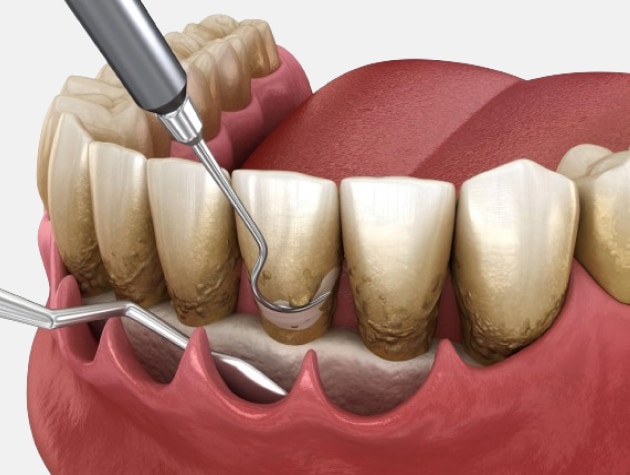
Scaling and Root Planing: Key Steps in Periodontal Care
The initial approach to addressing periodontal disease often begins with a thorough cleaning procedure referred to as scaling or root planing. These non-surgical treatments aim to remove the root causes of the disease, such as dental plaque and tartar (calculus), which are responsible for gum inflammation and related oral health issues. Scaling and root planing may be administered alone or as a preventive measure, typically recommended for individuals with gingivitis or varying degrees of periodontal disease.
Comprehensive Dental Care: Scaling, Root Planing, and Beyond
After conducting a thorough oral examination, which includes x-rays and visual inspection, our dentist may recommend scaling and root planing based on factors such as gum condition, tartar buildup, pocket depth, and the progression of periodontitis. Local anesthesia may be administered during the procedure for comfort.
- Scaling involves the removal of plaque and calculus from tooth surfaces, focusing particularly on the area below the gum line using an ultrasonic scaling tool. This tool often includes an irrigation feature to deliver antimicrobial agents beneath the gums, reducing oral bacteria.
- Root Planing aims to smooth the tooth root surfaces to eliminate bacteria, toxins, and tartar, promoting healing and preventing future bacterial attachment on cementum and dentin surfaces.
To control bacterial growth and combat periodontitis, our dentist may recommend antibiotics or antimicrobial irrigation. These treatments involve using chemical agents or mouth rinses to inhibit toxin formation.
In cases where deep pockets develop between teeth and gums, making plaque removal challenging, surgical intervention may be necessary to restore periodontal health effectively.
Benefits of Scaling and Root Planing for Periodontal Health
Scaling and root planing, when successful, offers numerous benefits for periodontal health. Firstly, it helps prevent diseases by eliminating bacteria known to travel through the bloodstream and potentially cause heart and respiratory issues linked to periodontal infections. Secondly, the treatment protects against tooth loss by addressing gum pockets that exceed 3mm in depth, reducing the risk of chronic inflammatory responses that damage gingival and bone tissues. Lastly, scaling and root planing can enhance aesthetics by removing superficial stains and reducing bad breath caused by food particles and oral bacteria, contributing to a healthier mouth overall.