
Welcoming New Patients!
How Advanced Technology Improves Dental Implant Procedures?

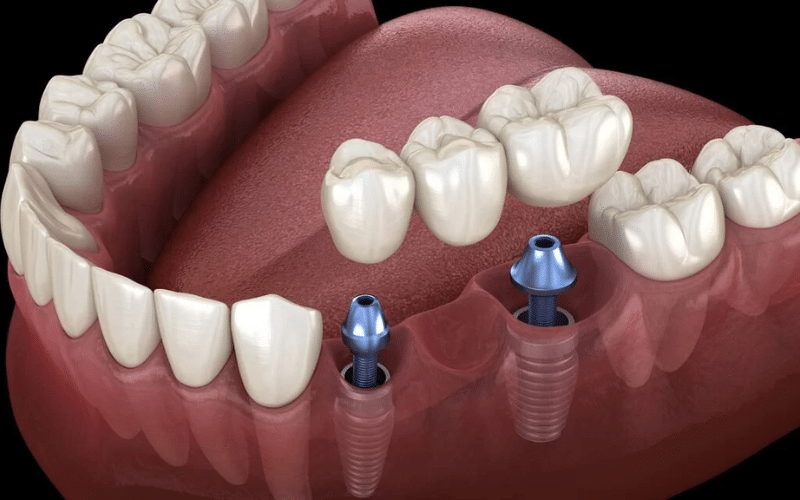
Dental implants have transformed tooth replacement since technological developments have elevated the process to a completely new level. Dental implants today are more successful, accurate, and efficient than ever because to cutting-edge advancements.
Read further to know how technology is changing dental implants in the future, from digital imaging to laser-assisted healing.
Role of Technology in Dental Implants
1. 3D Cone Beam CT Scans with Digital Imaging
Implant placement was made more difficult by the restricted views of the jawbone that traditional X-rays offered. These days, dentists can use 3D Cone Beam CT (CBCT) scans to:
- View your sinuses, nerves, and bone structure in 360 degrees.
- Determine implant appropriateness by accurately measuring bone density.
- Reduce difficulties by precisely planning implant location.
For a flawless implant experience, this cutting-edge imaging reduces uncertainty and increases success.
2. Implant Surgery Guided by Computer
A process that is almost error-free due to its extreme precision. Digital planning is used in computer-guided implant surgery to:
- Make a personalized surgical guide to ensure precise implant placement.
- Shorten the duration of operation and lessen the damage to the surrounding tissues.
- Enhance patient comfort and recuperation following surgery.
Research indicates that the success percentage for guided dental implant surgery in Frisco is 98.3%, while the success rate for traditional procedures is 91%.
3. Digital Impressions for a Perfect Fit
Messy, uncomfortable putty impressions are a thing of the past. Digital intraoral scanners now allow for:
- Highly accurate 3D models of your teeth and gums.
- Faster turnaround times for crowns and abutments.
- A more comfortable experience—no gagging or discomfort.
This technology ensures your implants and restorations fit flawlessly, enhancing both function and aesthetics while supporting the development of your oral health.
4. Laser Technology for Faster Healing
Lasers are transforming soft tissue treatment around dental implants. Laser-assisted procedures help by:
- Minimizing bleeding and discomfort during surgery.
- Speeding up gum healing and reducing infection risk.
- Ensuring a stronger bond between the implant and surrounding tissue.
By reducing trauma, lasers help patients heal quicker with less pain.
5. Stronger, More Durable Implant Materials
Innovations in implant materials have significantly improved durability and biocompatibility. Modern advancements include:
- Zirconia implants, which offer a metal-free, natural-looking alternative to titanium.
- Nanotechnology coatings, enhancing osseointegration (bone fusion).
- Stronger titanium alloys, reducing implant failure risks.
With these advancements, implants are now longer-lasting and more reliable than ever before.
Overal, advanced technology has made dental implants safer, more accurate, and more successful than ever. From 3D imaging and laser-assisted healing to stronger materials, these innovations enhance every step of the process.
If you’re considering dental implants, choosing our dentist who utilizes modern technology can make all the difference—ensuring a smooth procedure and long-lasting results. Ready for the future of dental care? Your perfect smile is just one breakthrough away!